





A $6.1 Trillion Trade Bloc, One Chokepoint, and a Push to Rewrite the Rules: RCEP’s Next Five Years
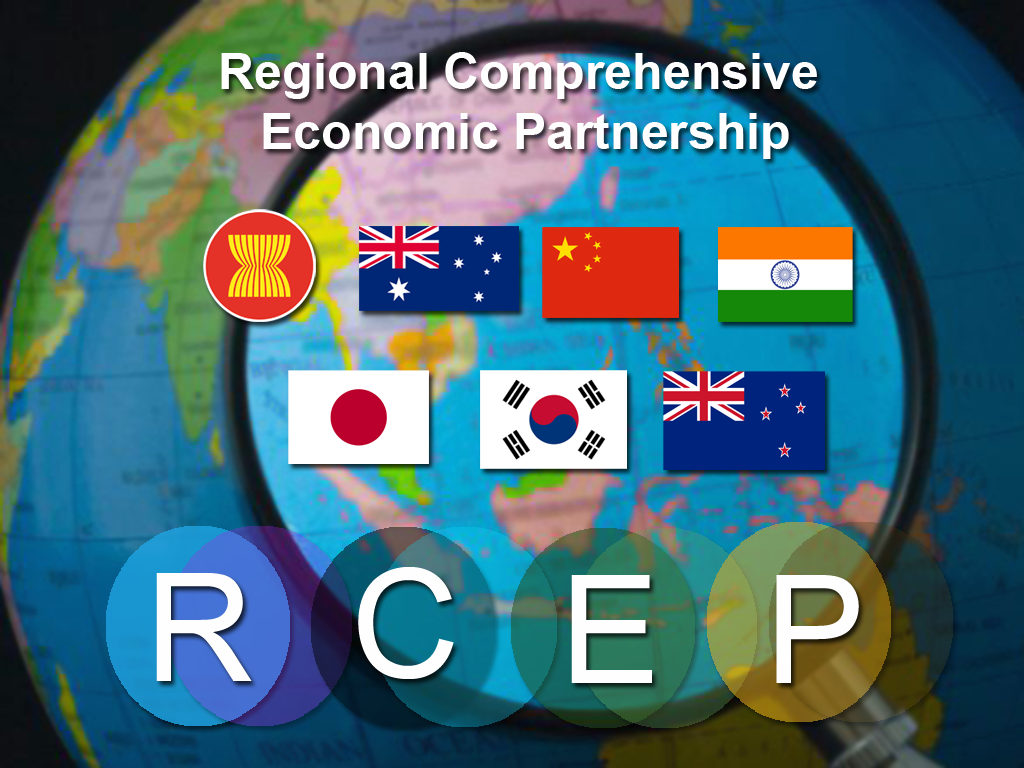
The Regional Comprehensive Economic Partnership has produced a set of numbers that would be the envy of any trade bloc. Intra-regional trade across its 15 Asia-Pacific members reached 6.1trillion in2025,up 24 percent from6.1trillion in 2025,up 24 percent from4.9 trillion in 2021, the year before the agreement took effect. GDP growth across the region averaged 3.6 percent annually from 2021 to 2024. Intermediate goods — the components and sub-assemblies that signal integrated supply chains — made up more than 68 percent of total RCEP trade in 2024, well above the global average.
These figures have turned RCEP into one of the world’s most consequential trading arrangements. But they also expose its vulnerability. In 2025, more than 80 percent of the crude oil imported into the RCEP region transited the Strait of Hormuz. The Asian Development Bank has projected that if regional conflict continues into the third quarter of 2026, growth across developing Asia-Pacific economies will decelerate sharply. A single maritime chokepoint now holds disproportionate influence over a $6 trillion trade zone.
The Response: Deeper Integration, Not Fragmentation
The diagnosis emerging from the bloc’s policymakers, as laid out in a recent assessment by Chi Fulin, president of the China Institute for Reform and Development, is that the answer to external supply chain risk is not retreat but internal consolidation. RCEP members are being urged to accelerate the regionalisation of energy and manufacturing supply chains — reducing dependence on single routes and building redundancy into the movement of essential goods. A supply chain emergency coordination mechanism is under discussion, designed to function as a regional buffer for critical commodities.
The rulebook that governs this trade is also being readied for revision. The immediate priorities are to raise zero-tariff coverage from its current level to above 95 percent within five years, and to transition services and investment schedules from the existing “positive list” approach — where only specified sectors are liberalised — to a “negative list” model that opens everything except explicitly protected areas. The distinction is commercial: a negative list widens the perimeter of opportunity for service exporters, financial institutions, and professional firms by making liberalisation the default.
Hong Kong’s Entry: A Financial Missing Piece
The most concrete short-term signal is the push to admit Hong Kong as a member, with a breakthrough targeted for 2026. The commercial logic is specific. Hong Kong operates under common law, hosts a mature financial services sector, and maintains deep capital markets. For ASEAN economies facing infrastructure financing gaps, a Hong Kong accession would open a direct channel to debt issuance, project finance structuring, and renminbi-denominated instruments. It would also give RCEP its first member that is a financial centre first and a goods producer second — altering the bloc’s institutional profile.
From Soft Constraints to Binding Governance
The institutional architecture is also under review. The RCEP Support Unit, currently an administrative body without enforcement powers, is proposed for upgrade into a formal secretariat. The shift from “soft constraints” to “binding governance” would move the agreement closer to the operational discipline of the Comprehensive and Progressive Agreement for Trans-Pacific Partnership, though without the latter’s labour and environmental conditionality. For businesses, a secretariat with enforcement capacity means disputes over rules of origin, customs classifications, or non-tariff barriers could be addressed through institutional channels rather than bilateral diplomacy.
The bloc’s economic centre of gravity remains China, which contributed more than 70 percent of RCEP’s growth between 2021 and 2024. Its tariff reduction commitments, particularly on intermediate goods, are the transmission mechanism through which much of the bloc’s trade expansion has flowed. The Hainan Free Trade Port is being positioned as a testing ground for full RCEP implementation and the China-ASEAN Free Trade Area 3.0, with an emphasis on institutional opening rather than one-off tariff cuts.
RCEP’s architects are betting that a trade architecture built on shared rules, deeper tariff cuts, and integrated supply chains can withstand external shocks more effectively than a collection of bilateral deals. The question the next five years will answer is whether the bloc can tighten its institutional framework fast enough to keep pace with the risks its members now face.










































First, please LoginComment After ~