





The Rise of the Global South: Regional Agenda and Strategic Opportunities at AIM 2025(3)
This article contains AI assisted creative content
If the speeches of global leaders outlined the grand vision for future investment, and the in-depth discussions across the eight portfolios revealed the logic of capital flows, then the regional agenda at AIM Congress 2025 anchored all of this in specific geographic spaces and development practices. From the unified market vision of the African Continental Free Trade Area to the latest developments in Asian cross-border infrastructure connectivity; from investment opportunities in Latin America's biodiversity economy to dedicated showcases for China's Greater Bay Area, Russia's Tatarstan, and the Democratic Republic of Congo's mining corridors—through a dense series of regional forums and investment destination presentations, the Congress witnessed the historic transformation of Global South nations from "investment recipients" to "investment partners."
I. The Africa Moment: From Continent of Hope to Capital's Chessboard
Throughout the AIM Congress 2025 agenda, "Africa" did not appear as a single track but as a thread woven through the entire event. From the Global Trade Forum to the Startups & Unicorns sessions, from the Africa Regional Forum to the AfCFTA special meetings, the continent's presence was ubiquitous. This was no coincidence—the advancement of the African Continental Free Trade Area is creating a unified market covering 1.4 billion people with a combined GDP of USD 3.4 trillion, while the restructuring of global supply chains is transforming Africa from a raw material exporter into a manufacturing and logistics hub.
Africa Regional Forum: Investment Prospects and Structural Opportunities
The Africa Regional Forum released the "Africa Investment Outlook Report," systematically outlining specific project needs across 54 countries in areas of agro-industrialization, digital infrastructure, and energy transition. Participants agreed that Africa stands at the threshold of structural transformation—a young demographic profile, rapid urbanization, improving business environments, and leapfrog development in digital technologies together constitute unique advantages for attracting long-term capital.
The forum particularly emphasized the explosive potential of agricultural technology in Africa. As climate change impacts traditional agriculture and global food security concerns rise, Africa's vast arable land resources are re-entering global investors' field of vision. Experts noted that drone seeding, satellite remote sensing monitoring, blockchain traceability, and mobile payments penetrating remote areas—technological terms once part of Silicon Valley narratives—are becoming the real picture of African agricultural transformation. One participant vividly noted: "Africa is skipping the long ladder of traditional industrialization and leaping directly into the digital age."
Digital infrastructure emerged as another major focus. With the successive connection of submarine cables and accelerated deployment of data centers, Africa's digital connectivity conditions are rapidly improving. Participants noted that this presents opportunities not just for telecommunications operators but prerequisites for all digital service enterprises entering African markets—from e-commerce platforms to fintech, from online education to telemedicine, the improvement of digital infrastructure is opening previously inaccessible market spaces.
Investment needs in the energy transition sector are equally urgent. Africa possesses the world's richest solar resources and enormous hydropower potential, yet electricity coverage remains severely inadequate. Participants noted that off-grid solar, microgrids, and energy storage solutions are becoming optimal paths to address Africa's electricity dilemma, while also serving as primary entry points for global capital to participate in Africa's energy transition.
AfCFTA Special Session: Digital Public Infrastructure and Cross-Border Investment Promotion
The special session hosted by the African Continental Free Trade Area Secretariat focused discussions on the strategic investment value of digital public infrastructure. Participants noted that the success of a free trade area depends not only on tariff reductions and market access but on the connectivity of physical and digital infrastructure—from cross-border transport corridors to single window customs clearance systems, from cross-border payment clearing to rules for cross-border data flows.
The session explored in depth how investment in digital public infrastructure can accelerate Africa's regional economic integration process. Experts noted that digital public infrastructure—including digital identity systems, cross-border payment platforms, and trade data exchange hubs—exhibits significant network effects and scale economies. Once established, these will dramatically reduce cross-border transaction costs and unlock enormous potential for regional trade.
Cross-border investment promotion emerged as another core issue. Participants noted that despite breakthrough progress in the high-level design of the African Continental Free Trade Area, the "last mile" problem of investment promotion remains unresolved—information asymmetry, regulatory uncertainty, and inadequate project preparation remain major obstacles to capital inflows. The session called on the international community to strengthen capacity building support for African investment promotion agencies, helping African countries enhance professional capabilities in project preparation and investment matching.
African Agri-SMEs: New Technologies Driving Sustainable Growth
In dedicated discussions within the Entrepreneurs Portfolio, African agricultural SMEs took center stage. The session on "Empowering Africa Agri-SMEs: New Technologies Providing Sustainable Growth in Farming" brought together agricultural technology entrepreneurs and investors from Kenya, Nigeria, Ghana, and other countries, sharing practical cases of how digital technologies are transforming Africa's smallholder production models.
Participants noted that African agriculture has long faced structural difficulties of low productivity, information asymmetry in markets, and lack of financing channels. But mobile internet penetration is changing all this—through mobile applications, farmers can access real-time weather information, market prices, and agricultural technical guidance; through mobile payments, farmers can conveniently conduct transactions and obtain credit; through blockchain technology, traceability and quality certification of agricultural products become more credible.
The session particularly emphasized the importance of the "last mile" problem. Participants noted that whether for new technology promotion or financial service coverage, the real constraint on African agricultural transformation is often the lack of logistics and distribution networks. Innovative models that open up the last mile from farm to market—whether through electric motorcycle fleets or community storage networks—are attracting significant investor attention.
II. Asia and Latin America & the Caribbean: Diverse Paths, Shared Vision
ESCAP Special Session: Cross-Border Infrastructure Connectivity and Green Technology Transfer
The special session hosted by the United Nations Economic and Social Commission for Asia and the Pacific focused on two major topics: cross-border infrastructure connectivity and green technology transfer. Participants noted that Asia is a crucial engine of global economic growth and the region with the most robust demand for infrastructure investment. However, cross-border infrastructure projects often face special challenges including coordination difficulties, long financing cycles, and uneven risk distribution.
The session shared the latest progress in cross-border infrastructure connectivity across Asia. From the Trans-Asian Railway Network to the Central Asia Regional Economic Cooperation corridors, from the ASEAN Power Grid to South Asia Subregional Economic Cooperation, a series of regional cooperation frameworks are advancing the planning and implementation of cross-border infrastructure projects. Participants emphasized that these projects represent not just physical connections but products of institutional coordination—from customs facilitation to standards mutual recognition, from investment protection to dispute resolution, institutional connectivity is equally crucial.
Green technology transfer emerged as another core issue. Participants noted that Asia is both a major source of global carbon emissions and the largest market for green technology applications. How to accelerate the transfer and diffusion of green technologies from developed to developing countries, and how to promote local adaptation of green technologies through South-South cooperation, became focal points of discussion. The session shared technological experiences and cooperation models from Japan, Korea, Singapore, and other countries in areas including clean energy, energy-efficient buildings, and green transportation, providing reference paths for regional green transformation.
Latin America & the Caribbean Forum: Biodiversity Economy and Impact Investing
The Latin America & the Caribbean Forum focused discussions on the region's unique advantage—biodiversity. Participants noted that LAC possesses the world's richest ecosystems, from the Amazon rainforest to the Andes mountains, from Caribbean coral reefs to the Pampas grasslands. In the context of global responses to climate change and biodiversity loss, this natural endowment is transforming into unique economic value.
The forum explored in depth the concept of the "biodiversity economy"—how to create economic value through sustainable use of biological resources while protecting ecosystem integrity. From genetic resource development in biopharmaceuticals to community participation models in ecotourism, from certification systems in sustainable agriculture to market mechanisms for forest carbon sinks, participants shared innovative practices from LAC countries in the biodiversity economy.
Renewable energy advantages emerged as another highlight. LAC possesses exceptionally abundant hydropower, wind, solar, and biomass resources, with renewable energy generation exceeding 70% in multiple countries. Participants noted that this represents not just an energy structure advantage but a magnet for attracting green investment—from green hydrogen production to electric mobility, from energy storage facilities to smart grids, LAC is becoming a hotspot for global energy transition investment.
Practical cases of impact investing became the forum's culminating issue. Participants shared cases from Brazil, Colombia, Mexico, and other countries—how patient capital and technical support can achieve substantial financial returns while protecting the environment and improving livelihoods. The forum called on global impact investors to direct more attention to LAC, exploring sustainable development paths of harmonious coexistence between humans and nature together with local communities and enterprises.
III. Mega Investment Forums: Concentrated Presentation of National Strategies
China Investment Forum: Opportunity Windows in the Greater Bay Area, Guangxi, and Xinjiang
The China Investment Forum brought together government representatives and entrepreneurs from the Guangdong-Hong Kong-Macao Greater Bay Area, Guangxi Zhuang Autonomous Region, and Xinjiang Uygur Autonomous Region, showcasing investment opportunities in China's new round of opening-up to global investors.
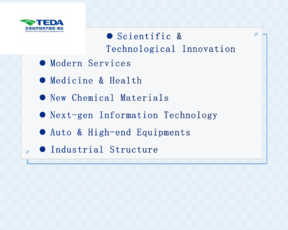
The Greater Bay Area, as one of China's most dynamic economic regions, focused on presenting investment opportunities in technological innovation, financial services, and high-end manufacturing. Participants noted that the Greater Bay Area not only possesses complete industrial chains and strong manufacturing capabilities but also leads in advancing institutional connectivity and innovation—from cross-border data flows to professional qualification mutual recognition, from cross-border use of research funds to intellectual property protection, a series of institutional breakthroughs are creating conditions for efficient connectivity between the Greater Bay Area and global capital.
Guangxi's presentation focused on its unique positioning as a frontier for China-ASEAN opening-up and cooperation. With accelerated construction of the New Western Land-Sea Corridor, Guangxi is becoming a logistics hub and industrial cooperation highland connecting Western China with ASEAN countries. The presentation introduced cooperative projects in digital economy, green low-carbon development, and modern logistics, welcoming global investors to share in the dividends of China-ASEAN cooperation.
Xinjiang's presentation highlighted its strategic position as the core area of the Belt and Road Initiative. Participants noted that Xinjiang not only possesses abundant energy resources and distinctive agriculture but also unique advantages in building a corridor economy for westward opening. From the Urumqi International Land Port Zone to the Kashgar Economic Development Zone, a series of open platforms are providing convenient access for domestic and foreign enterprises to enter markets in Central Asia, South Asia, and West Asia.
Russia Regional Investment Forum: Investment Opportunities in Tatarstan and Other Federal Subjects
The Russia Regional Investment Forum focused on investment potential in federal subjects including the Republic of Tatarstan. As Tatarstan President Rustam Minnikhanov stated in the Global Leaders' Debate, the region's partnerships with Muslim countries are continuously deepening, and Kazan will become the Cultural Capital of the Islamic World in 2026, providing unique opportunities for deepening investment cooperation with the Islamic world.
The forum introduced in detail investment opportunities in Tatarstan across petrochemicals, machinery manufacturing, information technology, and agriculture. Participants noted that Tatarstan is not only an important industrial base in Russia but also a leader in promoting economic diversification and digital transformation. Platforms including Innopolis and the Alabuga Special Economic Zone offer foreign investors tax incentives, infrastructure support, and facilitation services.
Presentations from other federal subjects were equally rich with highlights. From resource development in the Far East to manufacturing special economic zones in Kaliningrad, from technological innovation clusters in Moscow to cultural tourism projects in St. Petersburg, Russian regions showcased diverse cooperation opportunities to global investors. The forum particularly emphasized Russia's needs in import substitution and localization production, providing clear guidance for foreign enterprises interested in deeply cultivating the Russian market.
Japan Talks: Technological Vision of Innovation Shaping the World
The Japan Talks forum, themed "Innovations Shaping the World," showcased Japan's leading advantages in cutting-edge technology and willingness for open cooperation. Participants noted that Japan's innovation capabilities in artificial intelligence, robotics, biotechnology, and new materials are globally leading, while urgent needs for improving production efficiency and quality of life in the context of declining birthrates and aging populations are creating enormous markets for technological innovation.
The forum focused on presenting cooperation opportunities in healthcare, clean energy, smart transportation, and disaster prevention and mitigation. Participants noted that Japan has accumulated rich experience in addressing aging society challenges—from care robots to smart senior living communities, from telemedicine to health management services, Japanese technologies and models can provide reference for countries facing similar challenges.
Presentation of the startup ecosystem became a forum highlight. Participants shared the latest measures in supporting technological innovation and entrepreneurship in Japan—from university technology transfer to venture capital ecosystem cultivation, from large enterprise open innovation to global entrepreneurial talent attraction. The forum extended invitations to global entrepreneurs, welcoming them to utilize Japan's innovation resources and market opportunities to jointly shape future technological landscapes.
DRC Investment Forum: Mining Corridors and Energy Transition
The Democratic Republic of Congo Investment Forum, personally presented by President Denis Sassou Nguesso, showcased the country's enormous potential in mining, energy, and infrastructure to global investors. As the President stated in the Global Leaders' Debate, the DRC's diversity, minerals, and role in climate conversations uniquely position it on the global stage.
The forum focused on presenting the DRC's mining corridor development plan. As the world's largest cobalt producer and important producer of copper, lithium, tin, and tungsten, the DRC plays an irreplaceable role in the global energy transition. Participants noted that with explosive growth in electric vehicles and energy storage industries, demand for the DRC's critical mineral resources will continue rising. The mining corridor development plan encompasses not only mine extraction but also construction of beneficiation, smelting, and processing capabilities, providing complete investment opportunities from upstream to midstream for enterprises intending to participate in global new energy industry chains.
The energy transition issue permeated the entire forum. Participants noted that the DRC possesses enormous hydropower potential, particularly the Inga Dam expansion project, which upon completion would become one of the world's largest hydropower stations, providing clean, affordable electricity to the DRC and the entire African region. The forum called on international investors to participate in the DRC's energy infrastructure construction, jointly unleashing the country's enormous potential in renewable energy.
Agricultural modernization and biodiversity economy also received attention. Participants noted that the DRC possesses Africa's most extensive tropical rainforest and arable land resources, whose strategic value is rapidly rising in the context of global food security and climate change. The forum welcomed investors to participate in the DRC's sustainable agriculture, ecotourism, and forest carbon projects, jointly exploring new paths for win-win development between conservation and growth.
From the unified market vision of the African continent, to cross-border infrastructure connectivity in Asia, to Latin America's biodiversity economy, to national strategy presentations across multiple countries—the regional agenda of AIM Congress 2025 painted a vivid picture of the rise of the Global South. This represented not just an exchange of ideas but a call to action. Global South nations, with increasing confidence, open embrace, and pragmatic cooperation, are reshaping the global investment landscape and moving toward a more balanced new world structure.





























First, please LoginComment After ~