





China's Trade with APEC Economies Surpasses 125 Trillion Yuan in 2021–2025
This article contains AI assisted creative content
Between 2021 and 2025, China's trade with Asia-Pacific Economic Cooperation (APEC) economies totaled 125.49 trillion yuan (around $18.05 trillion), up 39.4 percent from the previous five-year period. In 2025 alone, trade reached 26.29 trillion yuan ($3.79 trillion), representing nearly 58 percent of China's total foreign trade, according to the 2026 APEC Sub-Committee on Customs Procedures (SCCP) plenary meeting in Guangzhou.
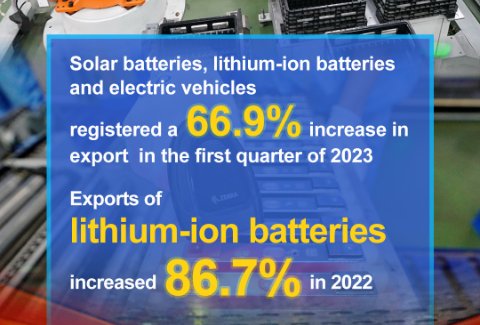
Trade with APEC partners has grown both in scale and sophistication. Emerging markets, including ASEAN members, Peru, and Mexico, maintained strong growth. High-tech exports to these economies—including electric vehicles, lithium-ion batteries, and photovoltaic equipment—totaled 4.63 trillion yuan in 2025, an 8.1 percent increase year-on-year, reflecting China’s strategic shift toward higher-value segments of regional supply chains.
At the corporate level, Chinese firms demonstrated notable performance:
-
LM Wind Power Blades (Fujian) Co. exported 17 batches of high-end wind turbine blades valued at 650 million yuan in 2025, an 82.3 percent increase from the previous year.
-
CJ (Shenyang) Biotech Co. Ltd., a subsidiary of South Korea’s CJ Group, exported feed additives worth 630 million yuan to APEC markets, up 45.4 percent year-on-year.
These examples highlight the rising demand for specialized, high-value products across the Asia-Pacific region and underscore opportunities for Chinese exporters to secure long-term market positions.
TWO
Zhao Zenglian, deputy head of the General Administration of Customs (GAC), emphasized that regional collaboration is crucial to address pressures on global supply chains. Key initiatives proposed for 2026 include:
-
Smart Customs Partnerships – Enhancing cross-border data sharing and digital infrastructure interoperability to accelerate trade flows.
-
Supply-Chain Resilience – Streamlining customs procedures, improving risk management, and fostering regulatory transparency to create a stable, predictable trading environment.
-
Digital Transformation – Leveraging AI and advanced analytics to efficiently process rising trade volumes while minimizing delays for legitimate goods.
Officials from Australia and New Zealand underscored that stronger information sharing and digital connectivity can facilitate faster, more efficient trade while supporting coordinated risk management.
THREE
China's growing trade with APEC economies highlights the region's central role in global economic growth, now representing over 60 percent of world GDP. Policy-driven facilitation, digital customs interoperability, and a focus on high-value exports position China to deepen integration within the Asia-Pacific market. For internationxal businesses, success in the region will depend on aligning products and services with local demand and leveraging digital trade channels to build resilient, long-term partnerships.








































First, please LoginComment After ~